Looking for Allergy, Asthma, or Eczema Care?
Hives (Urticaria)
Hives (Urticaria) at Allergy, Asthma, and Eczema Care of Queens in Forest Hills, Astoria, Ozone Park, and Jamaica, NY
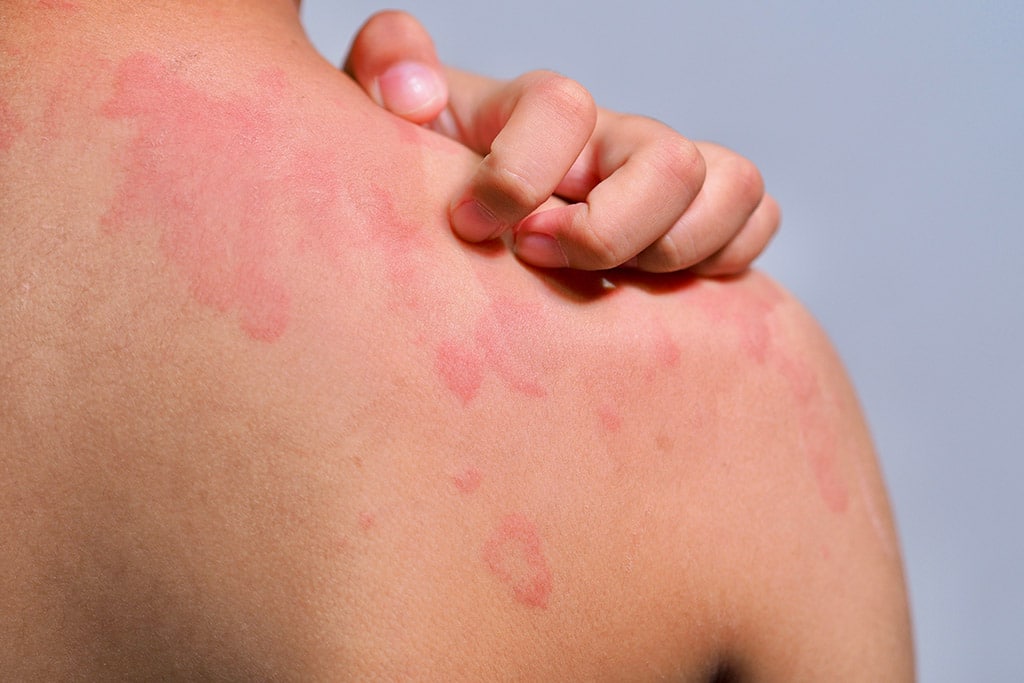
Hives, also called urticaria, are itchy, raised welts that can appear anywhere on the body. They can show up suddenly, change shape, and move around. At Allergy, Asthma, and Eczema Care in Forest Hills, Astoria, Ozone Park, and Jamaica, NY, we offer patient-centered evaluation and treatment options for hives, including recurring hives that interrupt sleep, work, school, and daily comfort.
If you are dealing with hives in Forest Hills, Astoria, Ozone Park, and Jamaica, NY, getting clear answers can be a relief. Some hives are triggered by allergies, infections, or medications. Others happen without an obvious cause. The goal of care is to reduce itching and swelling, identify patterns when possible, and help prevent flare-ups using evidence-based options. (1–3)
What are hives (urticaria)?
Hives are raised, swollen areas of skin that usually itch and may appear red or skin-colored. Each individual hive often lasts less than 24 hours, but new ones can continue to appear. Hives happen when certain immune cells release histamine, which causes swelling and itching in the skin. Common features include:
- Itchy or burning welts
- Swelling that comes and goes
- Spots that change size or location
- Skin that turns pale when pressed
Some people also experience angioedema, which is deeper swelling under the skin, often affecting the lips, eyelids, hands, or feet. (1, 2)
What causes hives?
Hives can have many triggers, and in some cases, no single cause is found. This is especially true for hives that last more than six weeks, known as chronic urticaria. Possible causes and contributors include:
- Viral or bacterial infections
- Foods or food additives
- Medications such as antibiotics or pain relievers
- Insect stings or bites
- Physical triggers like heat, cold, pressure, or exercise
- Stress or lack of sleep
- Autoimmune-related inflammation
When hives last less than six weeks, they are called acute urticaria. When they occur most days for six weeks or longer, they are called chronic urticaria. (1–3)
How are hives diagnosed?
Hives are usually diagnosed based on how the rash looks and behaves over time. Evaluation focuses on understanding patterns, timing, and possible triggers. This may include:
- A detailed symptom and health history
- Review of recent illnesses, foods, and medications
- Discussion of physical or environmental triggers
- Allergy testing when reactions suggest an allergic cause
- Select blood tests in some chronic cases
There is not always a single test that explains chronic hives. Diagnosis often involves combining medical history with symptom response over time. (1, 2)
What treatments are used for hives?
Hives treatment focuses on reducing itching and swelling and preventing flare-ups. Options may include:
- Non-drowsy antihistamines to block histamine and reduce symptoms
- Adjusted antihistamine dosing for chronic hives when appropriate
- Short courses of oral corticosteroids for severe flares in select cases
- Biologic therapy for chronic hives that do not respond to antihistamines
- Trigger avoidance strategies when a clear trigger is identified
Supportive steps such as cool compresses, gentle skin care, and avoiding scratching can also help reduce discomfort. (1, 2, 4)
When should hives be treated as an emergency?
Most hives are not dangerous, but urgent care is needed if hives occur with:
- Trouble breathing or wheezing
- Swelling of the tongue or throat
- Dizziness or fainting
- Severe stomach pain or vomiting
- A rapid reaction after eating a food, taking medication, or a sting
These symptoms may signal anaphylaxis, which requires immediate medical attention. (5)
Why Choose Allergy, Asthma, and Eczema Care for Hives Treatment?
At Allergy, Asthma, and Eczema Care in Forest Hills, Astoria, Ozone Park, and Jamaica, NY, we specialize in evaluating and managing hives with personalized care that focuses on both symptom relief and identifying contributing factors. Whether you live in Forest Hills, Astoria, Ozone Park, and Jamaica, NY, we are committed to helping patients understand their condition and explore effective treatment options.
If hives are affecting your comfort, sleep, or quality of life, Allergy, Asthma, and Eczema Care is here to help. Our approach is patient-focused, evidence-based, and designed to support long-term symptom control.
Take the First Step Toward Better Health
Whether you're seeking Hives (Urticaria), or looking for clarity about what may be triggering your reactions, let Allergy, Asthma, and Eczema Care of Queens be your trusted partner in care.
Experience care that’s personal, proactive, and centered around you.
References:
1. Zuberbier, T., Abdul Latiff, A. H., Abuzakouk, M., Aquilina, S., Asero, R., Baker, D., … Church, M. K. (2022). The international EAACI/GA²LEN/EuroGuiDerm/APAAACI guideline for the definition, classification, diagnosis, and management of urticaria. Allergy, 77(3), 734–766.
2. Kaplan, A. P. (2017). Chronic spontaneous urticaria: Pathogenesis and treatment considerations. Allergy, Asthma & Immunology Research, 9(6), 477–482.
3. Kolkhir, P., Borzova, E., Grattan, C., Asero, R., Pogorelov, D., & Maurer, M. (2017). Autoimmune chronic spontaneous urticaria: What we know and what we do not know. The Journal of Allergy and Clinical Immunology, 139(6), 1772–1781.
4. Maurer, M., Rosén, K., Hsieh, H. J., Saini, S., Grattan, C., Gimenéz-Arnau, A., … Kaplan, A. (2013). Omalizumab for the treatment of chronic idiopathic or spontaneous urticaria. The New England Journal of Medicine, 368(10), 924–935.
5. Simons, F. E. R., Ardusso, L. R. F., Bilò, M. B., El-Gamal, Y. M., Ledford, D. K., Ring, J., … World Allergy Organization. (2011). World Allergy Organization guidelines for the assessment and management of anaphylaxis. World Allergy Organization Journal, 4(2), 13–37.
Access The Convenient Care You Deserve
Get In Touch
Call, click, or visit — we’re here to help!
112-03 Queens Blvd Suite 209 Forest Hills, New York 11375
Get In Touch
Call, click, or visit — we’re here to help!
2381 38th Street, Astoria, NY 11106
Get In Touch
Call, click, or visit — we’re here to help!
10721 Queens Blvd Suite 2 (temporarily Suite 6) Forest Hills, NY 11375
Get In Touch
Call, click, or visit — we’re here to help!
100-02 Rockaway Blvd Second Floor, Ozone Park, NY 11417
Get In Touch
Call, click, or visit — we’re here to help!
147-17 Jamaica Ave, Jamaica, NY 11435
Our Promise to You
To provide advanced, personalized care with skill, compassion, and respect—every time you visit. You’re not just a condition to treat; you’re a whole person with unique goals and challenges, and we’re here to help you overcome them.
We’re committed to serving our community with integrity and heart, combining innovation with genuine connection—because true healing goes beyond checklists.


© 2026 Allergy, Asthma, and Eczema Care of Queens | Accessibility | Terms & Conditions | Privacy Policy | Powered by DoctoGrow